The Stealth Tax: Why Every Hour of B-2 Flight Time Costs a Fortune Before the Wheels Ever Leave Whiteman
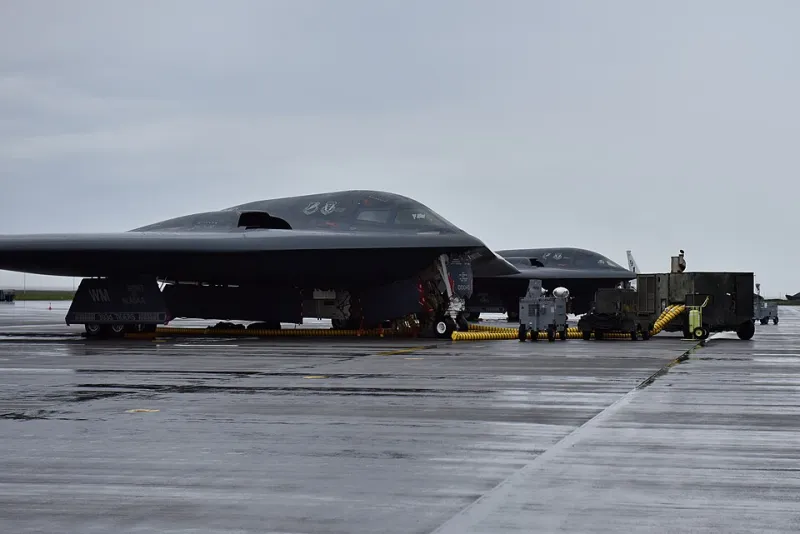
Photo: U.S. Air Force photo by 2nd Lt. Lindsey Weichel, Public domain, via Wikimedia Commons
When the B-2 Spirit entered service in the 1990s, critics fixated on its eye-watering flyaway cost — roughly $2 billion per aircraft once program overhead is factored in. That number, however shocking, was a one-time hit. The figure that should have kept Pentagon cost analysts awake at night was recurring: the perpetual, year-over-year expense of keeping twenty low-observable bombers mission-capable from a single flightline in central Missouri.
Sustainment, not procurement, is where stealth's real bill comes due.
The Maintenance Hour Trap
Publicly available Air Force budget documents and GAO reporting have long flagged the B-2's maintenance burden. Where a fourth-generation fighter might demand ten to twenty maintenance hours per flight hour, the Spirit's low-observable requirements push that figure dramatically higher — by some estimates, well beyond sixty hours for every hour aloft.
The driver isn't the engines or the avionics, which are demanding enough. It's the skin. The B-2's radar cross-section depends on the integrity of radar-absorbing coatings, gap sealants, and access panel treatments. Every panel opened for routine inspection must be resealed and retested. A small defect in a coating edge that would be cosmetic on an F-16 is, on a Spirit, a mission-degrading signature problem.
That means maintainers spend enormous portions of their day on work no other aircraft requires — sanding, applying, curing, and measuring materials engineered to disappear.
A Hangar Built Like a Laboratory
Then there's the infrastructure. The B-2 cannot simply park on any ramp. Its coatings and structural adhesives are sensitive to temperature and humidity, which is why the Air Force invested hundreds of millions in climate-controlled hangar complexes at Whiteman Air Force Base — and later at forward locations like Andersen AFB in Guam and Fairford in England.
Each of those structures represents capital cost, energy cost, and staffing cost devoted to a single airframe type. When the service deploys B-2s overseas, it effectively ships a piece of Missouri's hangar ecosystem along with them. No other bomber in the inventory travels with that kind of environmental entourage.
The Personnel Pipeline
The manpower equation compounds the problem. Maintaining a low-observable fleet requires specialists trained in signature management — a career field with a long training pipeline and high value on the civilian market, where the same skills command premium salaries in aerospace. Retention pressures in these specialties translate directly into sustainment costs, as experienced hands cycle out faster than replacements mature.
Add contractor support, spares peculiar to a fleet of only twenty airframes, and the loss of any economies of scale, and the annual cost of operating the B-2 fleet has been estimated in the range of $1.5 to $2 billion per year — averaging out to tens of millions annually per aircraft, before a single training bomb is dropped.
Why This Math Shapes the B-21
This is the lesson the Air Force carried into the B-21 Raider program. The Raider's designers were given explicit sustainment mandates: open-architecture systems, coatings and materials chosen for maintainability, and a fleet size — planned at a minimum of 100 aircraft — large enough to spread fixed costs and allow realistic basing options beyond a single fortress in the Ozarks.
The B-2's experience demonstrated that low observability purchased without a sustainment strategy becomes a gilded cage: an exquisite capability that can be flown sparingly, from few places, at extraordinary cost. Stealth, in other words, is never owned. It is rented, indefinitely, from a maintenance ecosystem that never sleeps.
For American airpower planning, the ghost isn't the aircraft. It's the invoice — and the B-21's ultimate success will be judged not at its first flight, but at its ten-thousandth maintenance hour.