The Hangar Hours: Why Stealth Lives and Dies in the Paint Shop

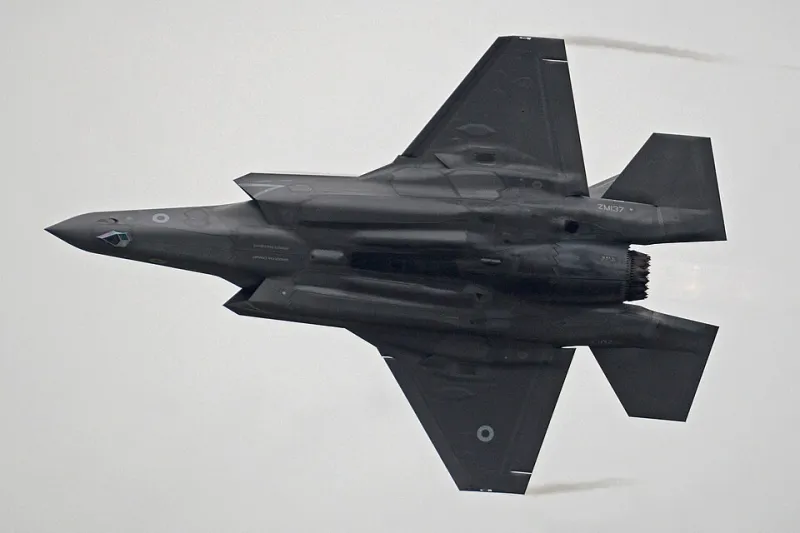
Photo: CedrickEdwardYapi, CC BY-SA 4.0, via Wikimedia Commons
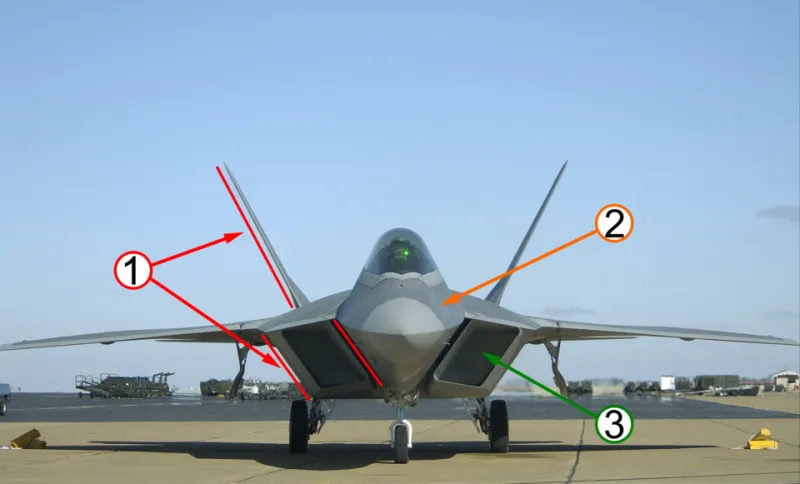
Ask a pilot what makes an aircraft stealthy and you'll hear about shaping, about planform alignment, about the ingenuity of a blended fuselage. Ask a maintainer and you'll get a different answer, usually delivered with the thousand-yard stare of someone who has just spent a shift in a climate-controlled hangar chasing a single fastener. Low observability is won in the design bureau but maintained in the paint shop — and the paint shop, for decades, was losing.
What RAM Actually Is
Radar-absorbing material is less a single substance than a family of solutions to the same problem: converting electromagnetic energy into heat before it can return to a receiver. Iron ball paint — carbonyl iron suspended in a binder — dissipates energy magnetically. Ferrite-loaded layers and lossy dielectric sheets do similar work at different frequencies. Edge treatments and conductive meshes manage the resonances that make gaps, panel joints, and access doors into unintended corner reflectors.
The problem is that these materials are inherently fragile. They are optimized for thinness and weight, not durability. They sit on airframes that experience thermal cycling from Mach 1.8 to subsonic, vibration, rain erosion, and the indignity of a crew chief's boot. Every crack, blister, or delamination is a potential scattering source — a tiny breadcrumb for an adversary's radar.
The F-35's Coating Crisis
No program illustrates the stakes better than the F-35's early years. The original low-observable coatings proved less durable than specification, requiring excessive touch-up and driving maintenance man-hours per flight hour far beyond projections. Missions were cancelled because jets were not in an LO-comparable state. The Navy, whose carrier environment adds salt, catapult forces, and humidity to the mix, struggled particularly.
The fixes were unglamorous but significant: tougher bonded coatings that resist wear, better application training, revised depot processes, and disciplined reporting of LO discrepancies. Sustainment metrics have improved markedly, but the episode left a lasting lesson baked into every subsequent program office: signature maintenance is not a line item, it is a design requirement.
New Materials, New Math
The next generation of coatings aims to change the equation structurally. Structural RAM — absorbing material integrated into composite skins rather than applied over them — reduces the maintenance burden by making signature management load-bearing. Ceramic-based and topcoat chemistries promise better thermal tolerance for high-speed flight. Additive manufacturing allows graded absorbers tuned to specific frequency bands with geometries no paint sprayer could achieve.
There is also a quieter revolution in process. Automated inspection tools can now map a coating's condition across an airframe, converting a subjective visual check into quantified data. That matters because the alternative — fleets grounded while maintainers chase marginal LO defects — is exactly the failure mode adversaries are counting on.
The Unseen Sustainment Battle
The deeper point is strategic. A stealth aircraft's advantage exists only as long as its signature is maintained, and signature maintenance is a per-sortie tax paid in man-hours, climate-controlled hangars, and specialized depots. In a Pacific fight with dispersed basing, the side whose coatings survive austere conditions wins a quiet but real advantage.
Stealth, in the end, is not a feature you buy. It is a condition you defend — one sanded seam and one cured panel at a time.