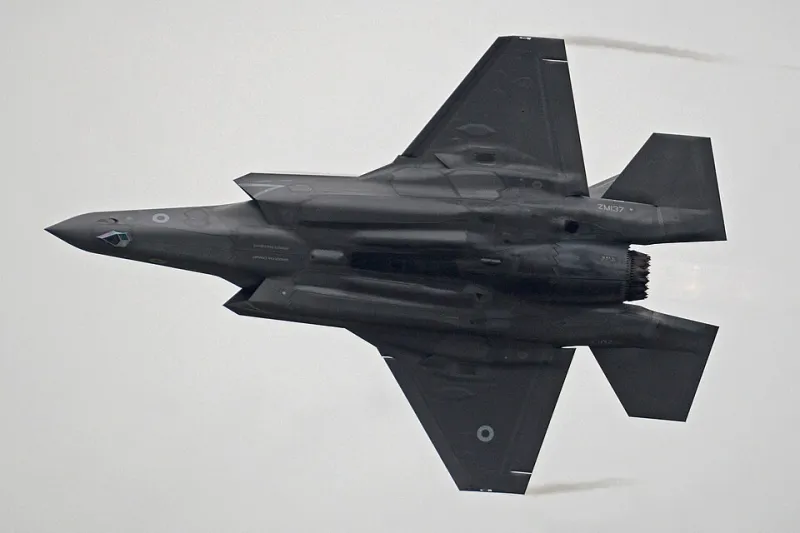
Ghost Stories: Five Contested Radar Sightings of Stealth Aircraft, Examined
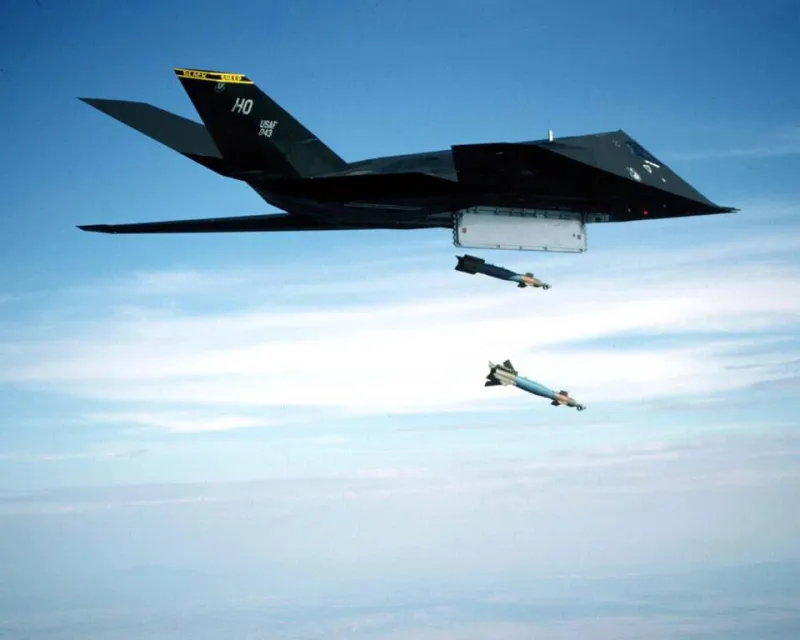
Photo: USAF Technical Sgt. Marvin Lynchard[2][3], Public domain, via Wikimedia Commons
Stealth aircraft occupy a strange place in the public imagination: machines that are simultaneously real and mythological. Every few years, a defense ministry or a retired radar operator announces that a stealth aircraft was detected, tracked, or — in the most dramatic versions — illuminated for a firing solution. The claims travel fast. The follow-up analysis rarely does.
Here are five of the most frequently cited cases, and what the record actually supports.
1. The F-117 Over Serbia, 1999
The most famous case is also the most consequential. On the night of March 27, 1999, a Serbian SA-3 battery under the command of Colonel Zoltán Dani shot down an F-117 Nighthawk near Buđanovci, the only stealth aircraft ever lost to hostile fire.
The popular version — that the Nighthawk was casually tracked from takeoff to target — is not what happened. The best available accounts, including interviews with Dani and US post-mortems, describe a battery operating with disciplined emissions discipline, exploiting a gap that opened when the aircraft's route and weapons bay doors created a momentary radar return. The Serbs used modified, low-frequency search radars and a lot of patience. It was a tactics problem, not a stealth-broken problem: the same battery reportedly never repeated the feat, and the F-117 continued combat operations over Serbia afterward without further losses.
What it revealed: low-frequency radars can create detection opportunities, but turning a transient blip into a kill requires an integrated system — and luck.
2. The F-117 'Detected' Over Iraq, 1991
During Desert Storm, Iraqi operators made repeated claims of tracking F-117s, and years later, some veterans of the campaign insisted their radars had seen the jets. US assessments found no evidence that any F-117 was effectively targeted; the aircraft flew 1,300 sorties without a scratch.
The most plausible explanation involves detection of the aircraft's radar-jamming support assets, misidentification of decoys, and the natural human tendency to interpret ambiguous returns as the thing you were told to look for. A radar contact is not an identification, and an identification is not a track quality sufficient for engagement.
What it revealed: claims of stealth detection often conflate 'something appeared on the scope' with 'we had a firing solution.'
3. The F-22 and the 'Chinese Radar' Claims
Periodic Chinese media reports have asserted that JY-27 and other VHF-band radars detected F-22s near Chinese airspace. These claims are, in a narrow sense, almost certainly true — and almost entirely unremarkable.
Low-frequency radar operates in a regime where stealth shaping is less effective; physics is physics. But VHF radars of this class have poor range resolution and accuracy. They can indicate that something is out there. They cannot reliably cue a missile. Every modern integrated air defense system, including America's, uses low-frequency early-warning radars as a coarse filter, with high-frequency fire-control radars doing the precision work — and it is the fire-control band where stealth earns its keep.
What it revealed: 'detection' is a word with many meanings, and the meaningful one is engagement quality.
4. The 2017 'F-35 Tracked by Iran' Episode
In 2017, Iranian state media claimed its radars had detected an F-35 near the country's borders, releasing grainy imagery as proof. Independent analysis of the imagery suggested it was inconsistent with genuine sensor footage, and the timing — amid domestic political pressures — raised familiar eyebrows.
The episode fits a well-worn pattern: detection claims serve propaganda purposes regardless of technical merit. That doesn't mean every such claim is false. It means claims must be weighed against incentive, evidence quality, and physics — in that order.
What it revealed: contested airspace produces contested narratives, and verification is rare.
5. B-2 Sightings During Allied Operations
Following operations over Yugoslavia and later Iraq, various outlets reported that 'radars had seen' B-2s, sometimes citing civilian air traffic control anomalies. In several cases, the 'detections' were contrails, infrared signatures, or the aircraft's own defensive emissions — not radar returns at all.
What it revealed: much of what the public reads as stealth penetration is actually stealth aircraft operating with deliberate care about every signature they emit, including the ones that have nothing to do with radar.
The Pattern Behind the Anecdotes
Across these cases, a consistent picture emerges. Stealth aircraft are not magic, and they are not detected in the way popular accounts suggest. Low-frequency radars generate ambiguous, low-quality indications. Converting those indications into a weapons-quality track requires a chain of sensors, datalinks, and fire-control radars — and that chain is precisely what stealth, electronic attack, and stand-off weapons are designed to break.
The cat-and-mouse game continues on both sides. Adversaries invest in multi-band radars and passive sensing; the US invests in full-spectrum signature management and next-generation platforms. The five cases above aren't proof that stealth is dead. They're proof that it never meant invisible — only that the attacker's problem is hard, expensive, and never fully solved.
For the engineers at Lockheed, Northrop, and the skunkworks in between, that's not a failure. That's the mission working as designed.