The Quiet Boat Standard: What Submariners Would Tell a Stealth Wing Commander

Photo by Photo by Gottfried Fjeldså on Unsplash on Unsplash
There is a story submariners tell about a crew that was meticulous in every measurable way and still got detected. The fault was a pump running a few cycles out of phase, a resonance the drawings said could not occur, discovered only after a long and uncomfortable analysis of who had heard what. The lesson is not about hardware. It is about the difference between a signature that is designed and a signature that is lived.
Stealth aviation has spent four decades buying design. It has spent far less time institutionalizing the operating discipline that submarines treat as the core of the profession. That gap is worth examining, not because aircraft are submarines, but because the quieter service has already run the experiment.
Two Very Different Signature Problems
A submarine is a large, slow, submerged object in a comparatively uniform medium, and most of what betrays it is self-generated. Machinery, propeller cavitation, flow noise, and the transient clang of a hatch are all products of the boat itself. An aircraft is the opposite: fast, small, and defined largely by how it scatters someone else's energy. Its radar signature is a design property; its acoustic and infrared signatures are byproducts.
Yet both services face the same structural problem. The signature that matters is the one present at a given moment, in a given geometry, and it is produced by the interaction of hardware, maintenance state, and human behavior. Submariners built an entire institutional apparatus around that insight. Aviation has largely distributed the responsibility across program offices and depot schedules.
Isolation as a Design Religion
Visit a submarine under construction and the dominant visual is mounts. Machinery sits on rafts. Rafts sit on resilient mounts. Pipes are isolated with flexible couplings and hung from shock-qualified hangers. The anechoic coating is not paint applied at the end; it is a tiled system whose bond integrity, coverage, and gap tolerances are inspected with the seriousness a structural engineer would give a wing spar.
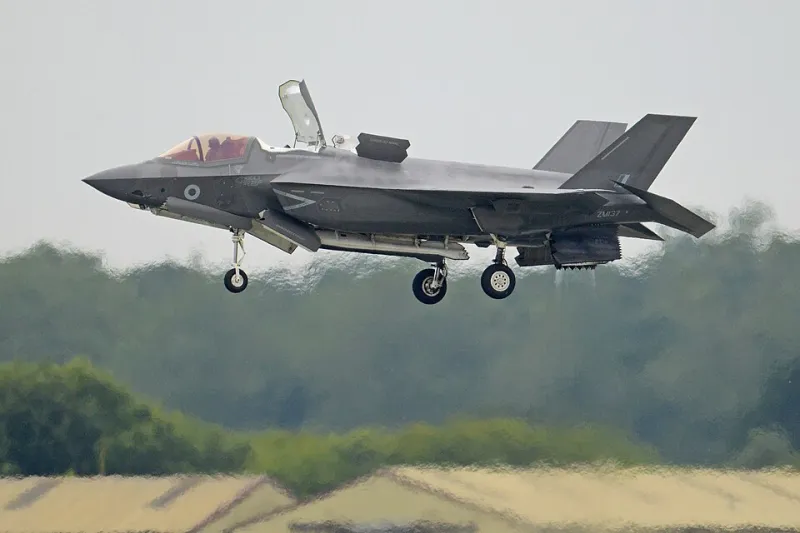
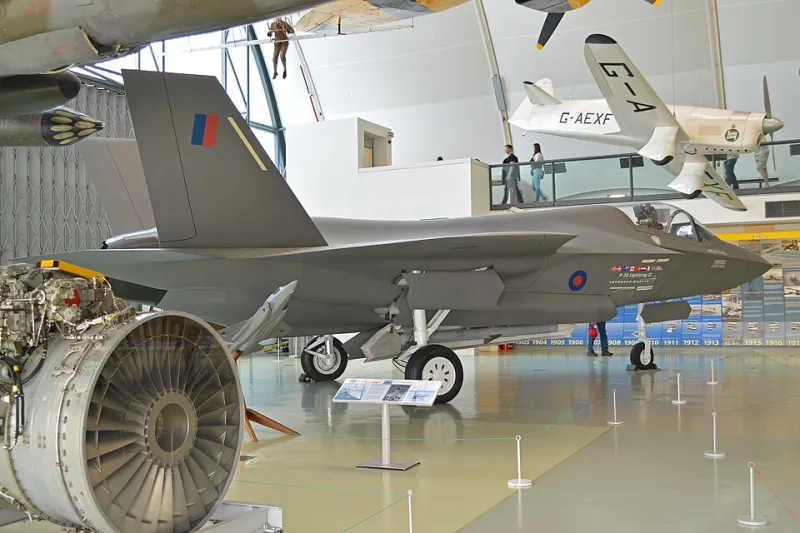
The aircraft analog is obvious and underappreciated. Radar-absorbent material is a system whose performance depends on panel gap tolerances, fastener flushness, coating thickness, and repair quality. A jet that leaves the factory with a superb signature can return from a deployment with a measurably worse one, and nobody will know unless someone measures it. Submarines measure. They measure acoustic signatures on a range after refit, compare them against a baseline, and treat a deviation as a finding rather than an administrative note.
EMCON as a Habit, Not a Procedure
Ask a submariner about emissions control and you will not get a briefing slide. You will get a set of reflexes: which mast goes up when, for how long, what the antenna's sidelobe pattern looks like against a known threat, and why a periscope exposure measured in seconds is still a decision that gets reviewed. This is a service where the electromagnetic signature is treated as an operational asset with a budget, and where spending it requires justification.
Stealth aviation has drifted in the other direction. Datalinks, sensor fusion, and cooperative engagement have made aircraft more communicative by design, and the signature cost of that communication is real even when it is small. The submarine answer is not to refuse to transmit; it is to make transmission a deliberate, tracked, and brief event with doctrine attached. That is a cultural posture more than a technical one, and it can be adopted without a single hardware change.
The Maintenance Culture
Perhaps the most transferable submarine habit is the treatment of the signature as a maintenance property rather than a design property. Boats return from patrol and are inspected for coating loss, fastener condition, and acoustic anomalies. Crews are trained to notice things—a rattle, a vibration, a panel that sits a millimeter proud—because the boat's survival depends on a thousand small observations nobody wrote into a checklist.
Aircrews already do this instinctively with visible damage. The gap is in the invisible domain. A maintainer who knows that a misaligned access panel is a signature event, not merely a fit-and-finish issue, behaves differently. So does a scheduler who understands that repeated quick-turn maintenance on the same panel has a cumulative cost. Submarines made signature awareness a career competency. Aviation has mostly made it a specialty.
What Doesn't Transfer
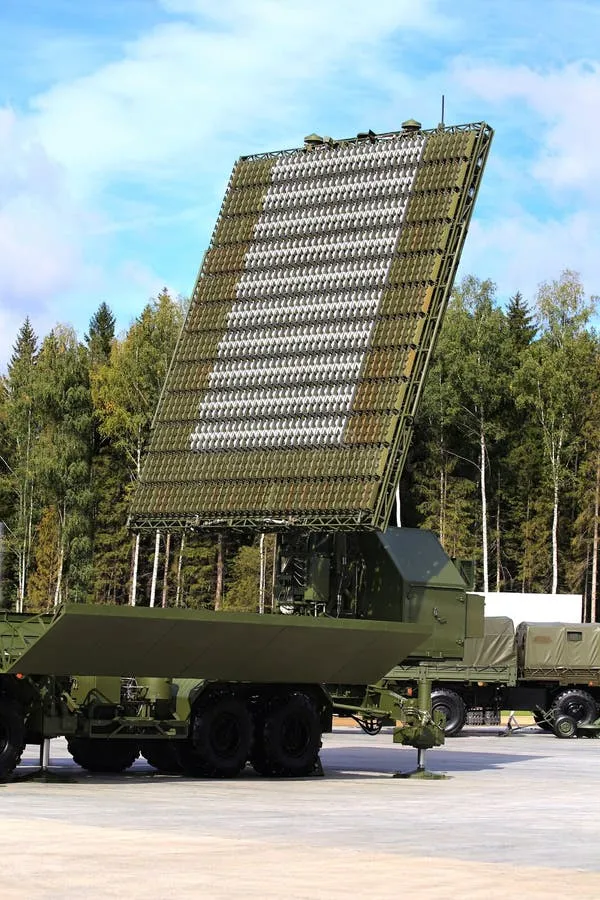
Honesty requires acknowledging the divergences. A submarine's quieting can be tested in isolation, on a range, under controlled conditions, with the boat's full attention. An aircraft's signature varies continuously with stores configuration, flight condition, and aspect, and it cannot be measured at sea on a Tuesday. Submarines have the luxury of a single, well-understood threat medium; aircraft face a spectrum of emitters from VHF early warning to millimeter-wave seekers.
There is also a scale problem. A submarine crew numbers roughly a hundred and thirty people who share one hull for months. A fighter wing is larger, more transient, and rotates constantly. Cultural practices that depend on long familiarity are harder to sustain.
The Takeaway
The submarine service learned early that stealth is not a specification you satisfy but a condition you maintain, and that the last ten percent of quieting lives in people rather than hardware. American low-observable aviation is now mature enough to need that same instinct, particularly as fleets shrink and each airframe carries more operational weight.
The question worth asking in a wing conference room is not whether the jet meets its signature specification on delivery. It is who, on a given Thursday in 2026, could tell you whether it still does.