Six Antennas That Rewrote the Rules of Hiding: A Short History of the Radar-Stealth Arms Race
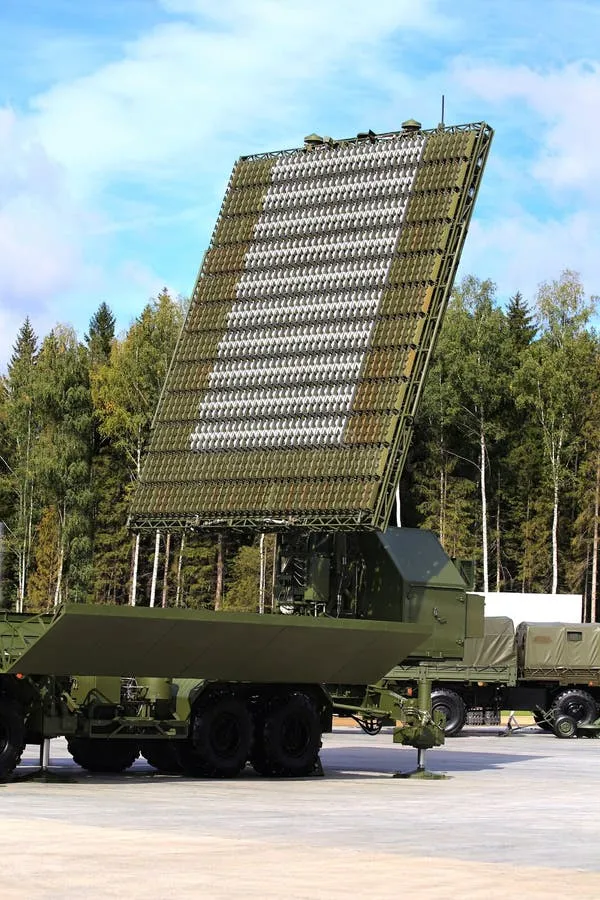
Photo: large VHF radar antenna array military air defense cold war, via thumbs.dreamstime.com
Stealth aircraft did not emerge in a vacuum. They are answers — each one a response to a particular radar, at a particular moment, that made previous evasion techniques obsolete. Understanding the modern low-observable fleet means understanding the sensors that shaped it. Here are six that mattered most.
1. The VHF Giants: Chain Home and Its Heirs
Britain's Chain Home network, operational through the Battle of Britain, operated in the VHF band — long wavelengths measured in meters. Early Soviet-bloc air defense radars inherited this approach, and therein lay a problem that would haunt American planners decades later: at long wavelengths, aircraft features like tailpipes and canopy edges become resonant scatterers, roughly the same size as the radar wave itself. Physics doesn't care how carefully you shaped the airframe. In 1940, this was irrelevant. By the 1970s, as US planners studied Soviet VHF early-warning sets, it became the founding problem of stealth.
2. The Doppler Revolution
Postwar pulse-Doppler radars introduced the ability to filter out ground clutter and track moving targets reliably — and, critically, to detect aircraft at low altitudes. This forced evasion thinking to move beyond simply flying low. Designers now had to consider how an aircraft's motion itself would be characterized, pushing toward reduced observability in every aspect, not just head-on.
3. The S-300 Era: High-Power, Multiband SAM Radars
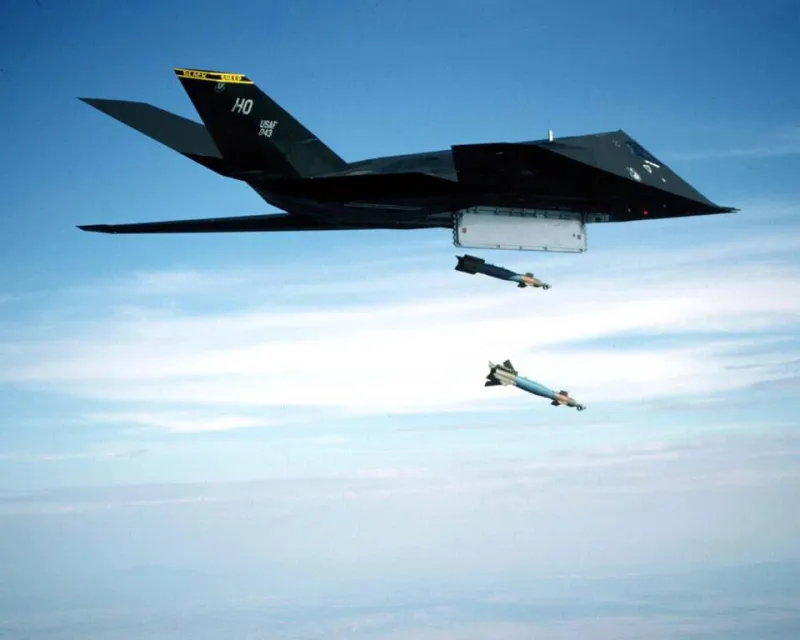
The Soviet S-300 system's fire-control radars operated in bands where classical shaping techniques were most effective — but they paired them with long-range acquisition radars in other bands, creating a layered problem. No single design trick could defeat the whole chain from early warning to missile guidance. This realization drove the F-117 and B-2 philosophy: reduce signatures across multiple bands simultaneously, accepting enormous complexity to buy survivability against integrated air defense systems.
4. Countering Shaping: Passive and Bistatic Concepts
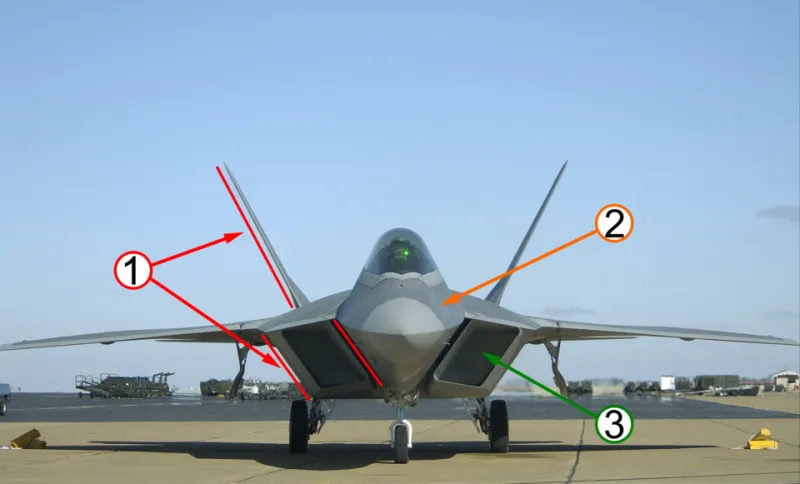
As American shaping philosophy matured, adversaries noticed that stealth aircraft were optimized against monostatic radars — transmitter and receiver co-located. Bistatic and multistatic concepts, where the transmitter and receiver sit far apart, can catch energy scattered off-axis from a shaped airframe. Experimental systems in the 1980s and 1990s, including efforts examined by both NATO and Soviet designers, proved the principle. Stealth engineers responded by refining edge alignment and radar-absorbing materials to manage scattering in every direction, not just the few angles that mattered most.
5. AESA: The Agile Threat
Active electronically scanned arrays changed the economics of detection. AESA radars can hop frequencies, shape beams dynamically, and operate in modes that frustrate traditional radar warning receivers. For stealth pilots, the danger shifted from raw power to unpredictability — a radar that behaves differently every few milliseconds is harder to geolocate and evade. Cockpit electronic warfare suites and mission data files became as important as the airframe's outer mold line.
6. The Sensor Network and the AI Fusion Problem
The current frontier isn't a single radar at all. Modern integrated air defense systems fuse data from many emitters — VHF early warning, multiband fire-control sets, passive receivers, even cellular towers — into a single tracking picture, increasingly with machine-learning algorithms sifting the noise. Individually, these sensors may glimpse a stealth aircraft briefly. Fused together, those glimpses can become a firing solution. The countermeasure is likewise networked: low-probability-of-intercept communications, manned-unmanned teaming, and electronic attack designed to poison the fusion layer itself.
The Match Continues
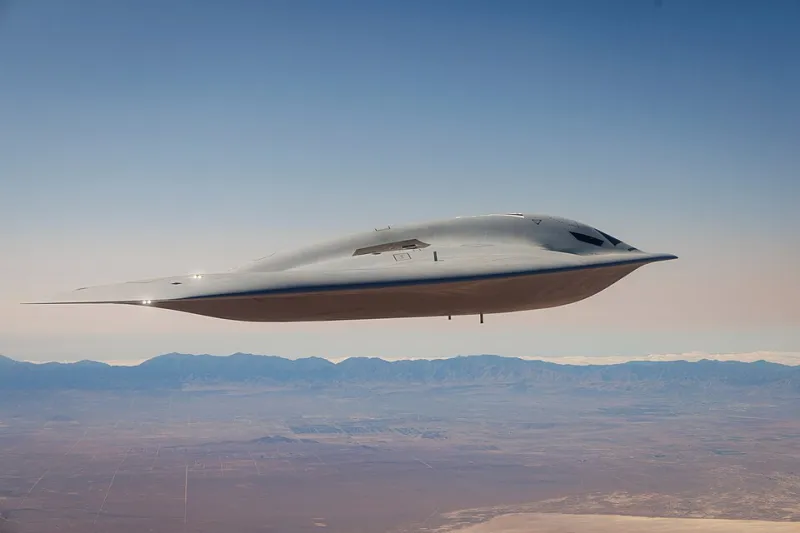
The pattern across eighty years is consistent: every detection breakthrough is eventually answered, and every signature reduction is eventually challenged. The F-117 was built to defeat a specific generation of threat radars; the B-21 is being built for the networked one. Neither side of this chessboard has ever delivered a final move — and that enduring stalemate is precisely why low observability remains a living discipline rather than a solved problem.