Show and Tell at 50,000 Feet: The New Calculus of Stealth Publicity

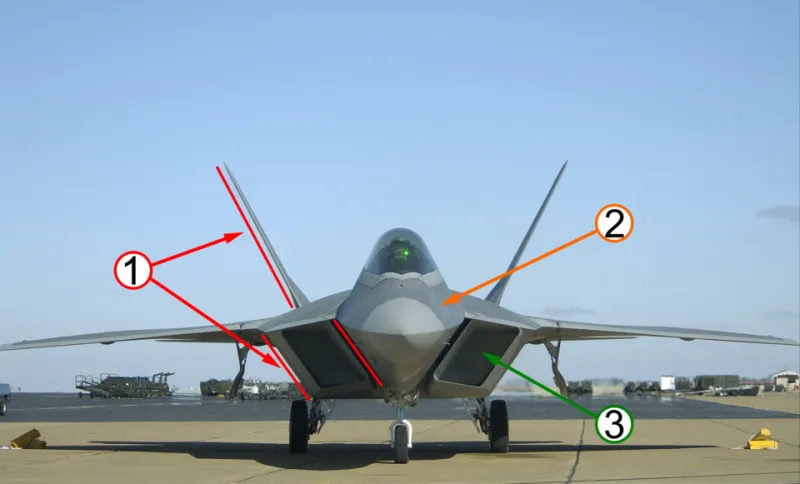
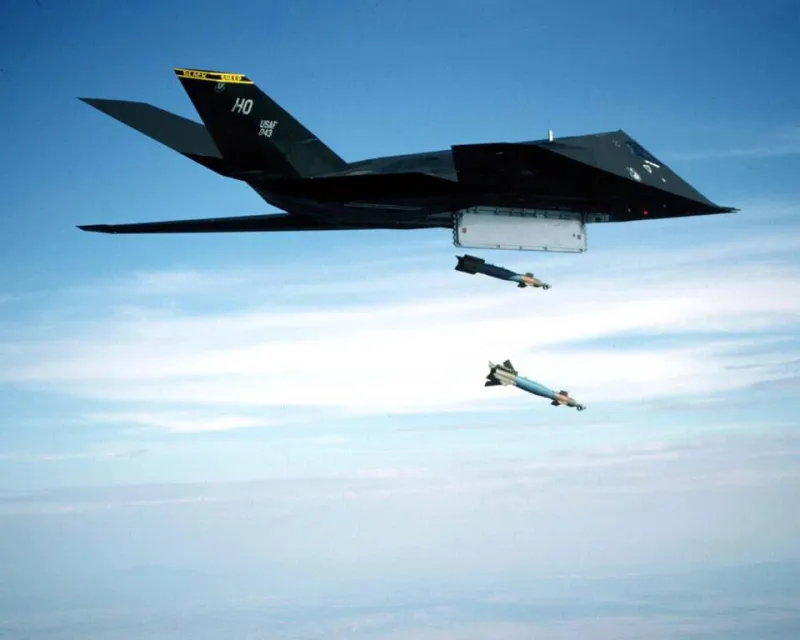
Photo: Secretary of the Air Force Public Affairs, Public domain, via Wikimedia Commons
There was a time when the Pentagon would neither confirm nor deny. The F-117 flew for five years before the world knew it existed, and even after the 1988 acknowledgment, the release photos were so heavily retouched they told adversaries more about the Air Force's sense of humor than its airframes. Compare that to the B-21 Raider's rollout at Palmdale in 2022 — a produced event, camera-friendly angles, a senior defense secretary on the podium. The contrast is not accidental. It is strategy.
From Tarps to Press Kits
The old model of black-program secrecy made sense in one specific context: a singular technological monopoly. When the United States was the only nation with a viable stealth program, denial preserved the advantage. Nobody could exploit what nobody knew to look for.
That monopoly is gone. Chinese and Russian low-observable programs are mature, and peer air defenses have spent thirty years studying how to detect shaped aircraft. Hiding the existence of American stealth technology no longer buys much — the adversary already knows it works. What secrecy can still protect are the margins: coatings, sensors, electronic warfare suites, the details that live in the last ten percent.
The Pentagon's current posture reflects that shift. The B-21 rollout revealed an airframe but deliberately withheld the exhaust, inlets, and sensor apertures — the parts that matter. Released footage of classified platforms, however curated, is best read as a controlled disclosure: enough to shape perception, not enough to reverse-engineer.
Deterrence Is a Communication Problem
Deterrence, at its core, is a message. A capability that no one believes in deters no one. The B-2 served for decades as a stealthy deterrent, but its value as a signal was always constrained by its scarcity — seven dozen airframes, carefully rationed in public appearances. The B-21 messaging campaign, by contrast, is explicitly aimed at two audiences simultaneously: Beijing and Taipei, Moscow and NATO. The intended message is simple — the arsenal is being renewed, and denial of American airpower is not a viable planning assumption.
This is where the transparency argument earns its keep. A adversary intelligence officer cannot tell from a rollout video whether the Raider's coatings are a generation ahead. But a Taiwanese defense planner, a Polish general, or a wavering ally in the Pacific can all draw the same reasonable conclusion: the United States intends to keep its qualitative edge, and betting against it is a long-position bet.
The Case for Caution
Skeptics inside the community raise a fair objection: imagery is data. High-resolution photos of the B-21's planform let adversary analysts refine radar-cross-section models, compare signatures against known designs, and update their detection research. Open-source analysts — a thriving and increasingly sophisticated cottage industry on both sides of the Pacific — have demonstrated they can extract real performance insight from nothing more than airshow photography and flight-test tracking data.
There is also a domestic cost. Every glossy rollout builds public expectation on a program still years from operational maturity. When budgets slip or testing stumbles, the same transparency that built political support becomes a vulnerability. The F-35's early years offer a cautionary tale in how public programs absorb public criticism.
A Leak, or a Lever?
The honest answer is that it is both, managed on purpose. The Pentagon is trading away information of marginal military value — an airframe shape the adversary could largely infer — for information of real strategic value: the perception of an unstoppable, modernizing strike force. As long as the release process remains deliberate, with the truly sensitive margins still locked down, transparency functions as an asset rather than a liability.
The risk is drift. Controlled disclosure works only while it stays controlled. The moment publicity becomes an end in itself — a communications shop chasing headlines with imagery the program office would rather protect — the slow leak begins. The tarps of the 1980s were a blunt instrument, but they reflected a clear principle: release nothing you don't have to. The modern calculus is subtler, and arguably smarter. It just requires the discipline to know where the line is — and the institutional will to keep it there.