The Library of Echoes: Inside the Signature Databases That Map Every Radar America Might Face
Photo: United States Army, Public domain, via Wikimedia Commons
Stealth is usually discussed as a physical property — faceted edges, radar-absorbent coatings, buried engines. But the counter-stealth business runs on something less glamorous: data. Specifically, enormous, jealously guarded databases of radar emissions and aircraft signatures, assembled intercept by intercept over seventy years of electronic intelligence (ELINT) collection. If you want to know who has genuinely cracked low-observable design, the answer isn't on a parade ground. It's in the library.
What Exactly Is in the Library
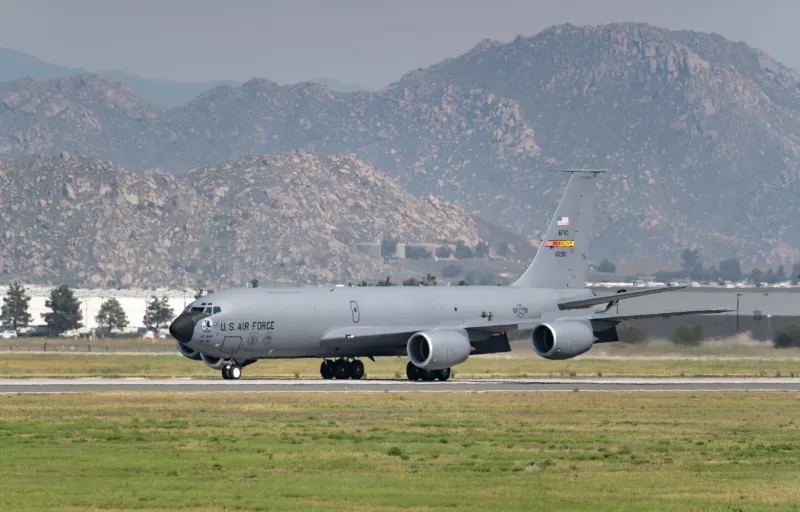
Every radar that radiates leaves a fingerprint: its frequency, pulse repetition interval, scan pattern, sidelobe structure, even the drift of its oscillators as components age. ELINT collectors — satellites, ships, aircraft like the RC-135 Rivet Joint, and ground stations ringing contested borders — harvest these fingerprints and file them into electronic order-of-battle databases. When a Su-57 or a J-20 shows up on a sensor, matching the emitter against the library is often the fastest way to identify it.
The second shelf of the library is arguably more valuable: radar cross-section (RCS) measurement data. Since the 1950s, when the US Navy's Radar Reflectivity Laboratory at MIT began charting model aircraft against known returns, both superpowers have been recording how airframes scatter energy. Every time a foreign fighter flies a known route past a calibrated collector, its signature gets a little less mysterious.
Reading the Adversary's Homework
Here is where the database becomes an analytical instrument rather than a filing cabinet. A nation's radar purchases telegraph its stealth philosophy. If a country buys and fields a dense network of high-bandwidth, low-frequency, multistatic radars — the way China has with systems optimized against very low observable targets — it signals that its own designers are building stealth aircraft and expect to face them. You don't engineer counter-stealth architecture for an air force that doesn't believe in stealth.
Conversely, the emissions record can expose bluffing. An aircraft promoted as fifth-generation whose peacetime operations show no corresponding changes in basing doctrine, emitter avoidance, or training patterns reads differently to a trained analyst. Genuine low-observable programs demand an operational culture — emission control, signature-conscious maintenance, route planning — that is extraordinarily difficult to fake. The databases capture that culture indirectly, through what gets radiated, when, and where.
The Asymmetric Openness Problem
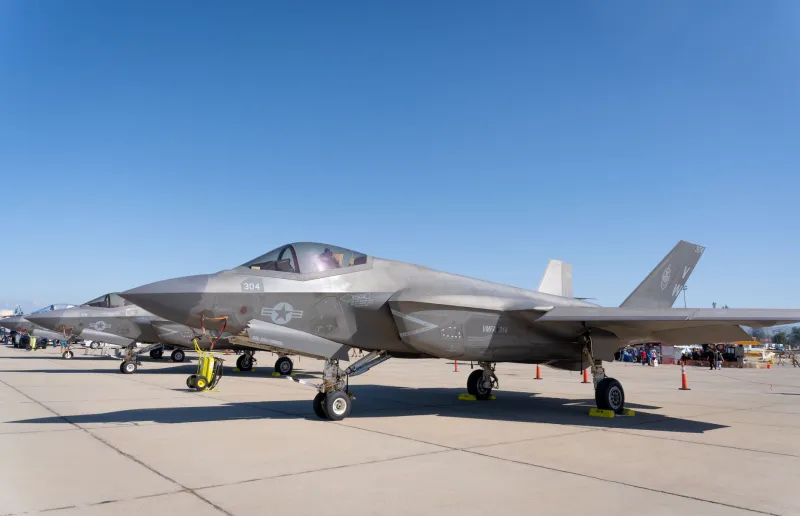
There is an uncomfortable asymmetry embedded in all this. American stealth aircraft operate from publicly known bases, overfly allied airspace with filed flight plans, and appear at airshows. Adversary signature collectors get repeated, high-quality looks at F-35s and B-2s under permissive conditions. The reverse is not true: the J-20 rarely leaves the region, and the Su-57's deployments have been brief and tightly managed.
This is why secondary collectors matter so much. Analysts lean on exercises, export customers, and even third-party radar data — the infamous Dutch and British university recordings of F-35 returns being a rare public example — to fill gaps. Every public appearance of a low-observable aircraft is, in effect, a free data point for anyone with a receiver and the patience to calibrate it. Whether those peacetime glimpses aggregate into something operationally meaningful remains one of the most debated questions in the field; most professionals argue that a static RCS measurement in a benign geometry tells you little about a contested-environment engagement. But the data accumulates regardless.
What the Ledger Says Today
Read honestly, the decades of intercepts suggest a spectrum rather than a binary. The United States retains the deepest institutional understanding of signature management — its databases are built on being both the leading collector and the leading hider. Russia's program appears hampered by compromises visible in the emissions record: platforms that radiate readily and airframes whose design suggests partial rather than comprehensive signature treatment. China's trajectory is the one to watch, with a collector infrastructure growing almost as fast as its stealth fleet, and a doctrine that treats the electromagnetic spectrum as terrain to be mapped.
The quiet conclusion is this: the stealth race is increasingly a race between libraries. The side that knows the other's radar return — and its own exposure — with greater fidelity holds a real advantage, one that no single airframe can offset. In the contest of echoes, the ledger never closes.