One Broken Supplier Away: The Fragile Arteries of Fifth-Gen Sustainment
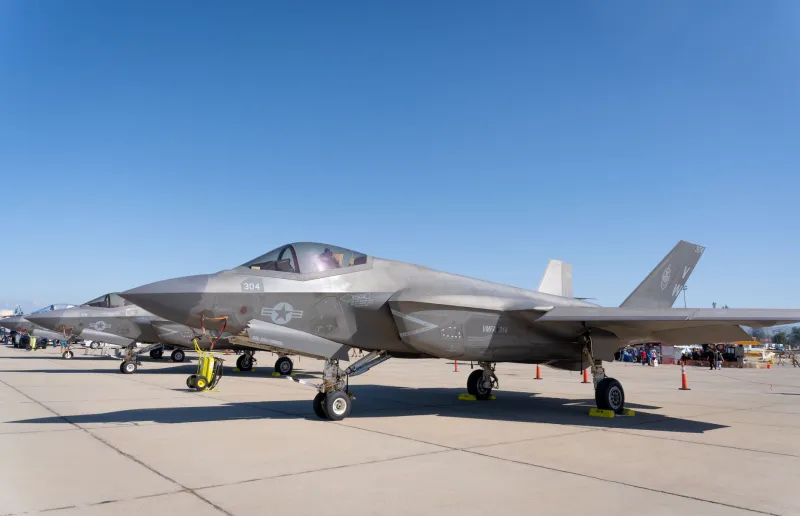
When Air Force officials brief Congress on F-35 readiness, the numbers usually arrive polished: mission capable rates, sortie generation figures, fleet-wide averages. What those briefings rarely contain is a map. If they did, the picture would look less like a supply chain and more like a nervous system — thousands of thin filaments converging on a handful of nodes, any one of which, if severed, could quietly ground a stealth fleet that cost taxpayers more than a trillion dollars to build.
The Coating Problem Nobody Sees
Low observability is not a fixed property of an aircraft. It is a condition that decays from the moment the jet leaves the hangar. Skin panels flex, fasteners loosen, radar-absorbing material chips at panel edges under the thermal cycling of supersonic flight. Restoring that condition is a permanent industrial enterprise — one that depends on a surprisingly short list of companies capable of producing the coatings, tapes, and calibrated measurement systems that make a fifth-generation fighter fifth-generation.
Several of those suppliers are sole-source by design. The specialty materials involved — radar-absorbing composites, conductive sealants, frequency-selective surface panels — exist in volumes so small and technical requirements so narrow that no second competitor has ever found it worthwhile to qualify. The Defense Department's own industrial base assessments have flagged these chokepoints repeatedly. A fire at one facility, a bankruptcy, a cyber intrusion: any of these becomes a fleet-wide problem within weeks, because there is no alternate drawer to pull from.
Readiness Rates as a Smokescreen
The headline metric — mission capable rate — conceals more than it reveals. A jet can be technically flyable while sitting well below its designed signature specification, and the difference between the two conditions is invisible on a PowerPoint slide. Sustainment data suggests a meaningful fraction of the F-22 and F-35 fleets spend time in a state best described as flyable but not fully low observable, waiting on coating repairs or replacement panels rather than engines or avionics.
This matters because signature degradation is cumulative and quiet. A unit flying from a forward-deployed location without full depot support will see its radar cross-section creep upward sortie by sortie. The aircraft still launches, still fights, still counts as ready. Whether it remains as survivable as its designers promised is a question the readiness number cannot answer.
What a War Would Do to the Pipeline
Peacetime consumption of stealth sustainment materials is already straining capacity. A major contingency would multiply demand at precisely the moment the industrial base is most exposed. Combat damage repair on low-observable surfaces is labor-intensive, technique-sensitive work that cannot be delegated to general aerospace mechanics. The trained workforce — the craftsmen who apply and validate these coatings — numbers in the low thousands nationally.
An export surge compounds the arithmetic. With F-35 operators now spanning Europe, the Pacific, and the Middle East, every allied jet draws from the same American and allied supplier pool. Spare parts, coating kits, and depot slots are shared resources. In a crisis, the allocation decisions made in the first seventy-two hours — who gets the limited supply of signature-critical spares — would shape both allied interoperability and coalition cohesion long before any shot is fired.
Where the Vulnerability Actually Lives
The uncomfortable truth is that the most critical nodes in the fifth-gen supply chain are not glamorous. They are small facilities producing conductive adhesives, anechoic measurement ranges, and the test fixtures that certify whether a repaired panel meets specification. Many operate on thin margins, sustained by defense contracts too small to attract new entrants and too specialized to survive losing a single customer.
Mitigation efforts are underway — the Pentagon's industrial base office has pushed for second sources on several critical materials, and the F-35 program office has invested in accelerated repair techniques that reduce depot dependency. But qualifying a new supplier for signature-critical materials can take years, because the qualification process itself requires access to classified performance data and controlled test infrastructure. There are no shortcuts that do not create their own risk.
The Honest Metric
If the Pentagon wants a true picture of stealth fleet health, it should publish a different number: the percentage of the fleet at full signature specification, measured against validated standards, not just mission capable rate. That figure would expose the sustainment gap the current metrics paper over, and it would give Congress something concrete to fund.
The fifth-generation fleet was designed to be seen by no one. Its supply chain, unfortunately, is visible to anyone who cares to look — and it is thinner than the readiness briefings admit. In a contest with a peer adversary, the jet that matters most may be the one that never left the paint shop.