The Beacon in the Blind Spot: Civil Airspace and Stealth’s Persistent Emissions Problem

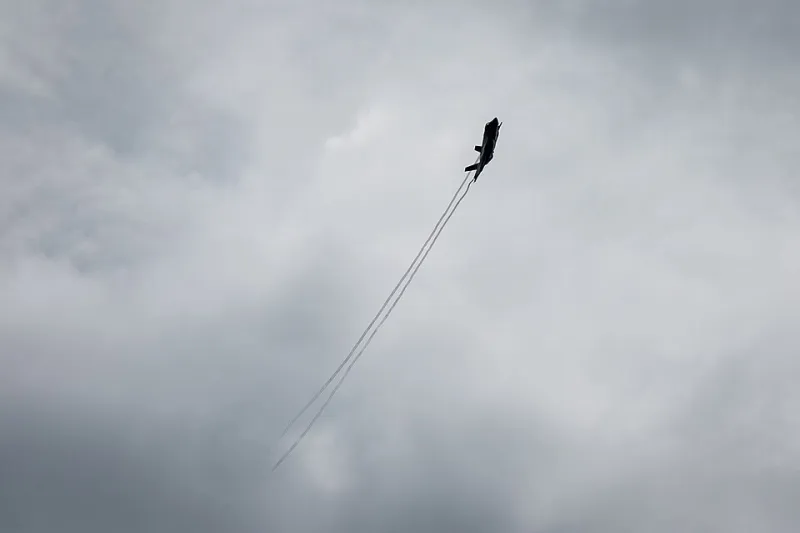
Photo by Photo by Mike Petrucci on Unsplash on Unsplash
Stealth is usually discussed as a property of the airframe: angles, materials, edge treatment, and the steady accumulation of design choices that reduce radar returns. But in peacetime, a low-observable aircraft operating in civil airspace faces a different problem. It must be seen—electronically, cooperatively, and predictably—by the same air traffic control system that civil aircraft rely on. The transponder is not an accessory to the mission. In controlled airspace, it is often the price of admission.
That creates a tension that is easy to state and difficult to eliminate. A stealth aircraft can be designed to minimize its radar cross section, but it cannot easily shape away the emissions required to announce its position, altitude, and identity to air traffic control. The civil sky is therefore one of the most persistent signature leaks in the entire low-observable enterprise—not because the emissions are necessarily compromising in a tactical sense, but because they are routine, recorded, and cumulative.
Two Signatures, One Aircraft
Signature management tends to separate radar cross section from emissions control, and for good reason. They are different physics problems with different countermeasures. Radar cross section is about reflected energy. Emissions control is about emitted energy: radios, datalinks, radars, interrogators, and transponders. A low-observable aircraft can be exceptionally difficult to detect on radar while remaining a loud, cooperative beacon in the electromagnetic spectrum.
In U.S. airspace, the relevant civil systems are familiar. Mode A/C and Mode S transponders provide identity and altitude. ADS-B Out broadcasts position and velocity. Traffic alert and collision avoidance systems, known as TCAS, interrogate other aircraft to build a local traffic picture. Each of these systems exists to prevent collisions and to allow air traffic control to separate aircraft safely. Each also creates an electronic record.
ADS-B is particularly important because it is intentionally open. The U.S. mandate for ADS-B Out took effect in 2020, and the system now underpins much of the domestic surveillance architecture. Its signals can be received by ground stations, satellites, and inexpensive receivers. Multilateration, or MLAT, can derive aircraft positions from transponder replies even when no ADS-B signal is present. The result is a civil surveillance layer that is broad, cheap to access, and difficult to opt out of without formal coordination.
The Regulatory Bargain
For military aircraft, the regulatory framework is not absolute. Exemptions, deviations, and special procedures exist, and not every stealth sortie begins with a civil squawk code. Restricted airspace, warning areas, and military operations areas provide relief from some civil requirements. ATC liaisons can coordinate transponder-off periods. Chase aircraft and ground radar can preserve safety when cooperative surveillance is reduced.
But those workarounds have costs. They consume airspace, require coordination, and reduce flexibility. They also impose a procedural discipline that must be learned and rehearsed. A fighter or bomber crew trained to operate in a contested electromagnetic environment may still spend most of its peacetime flying in airspace where the default is to be cooperative. The aircraft is not failing to be stealthy in those moments. It is being asked to be safe.
The temptation is understandable. Leaving the transponder on is simpler. It reduces workload, satisfies controllers, and avoids the awkward question of why a military aircraft is transiting civil airspace without the usual electronic identification. But convenience has a signature cost. A single sortie may reveal little. A pattern of sorties reveals bases, training areas, tanker tracks, maintenance cycles, and operational rhythms. Aggregated over months, the civil record becomes a map of behavior.
What the Civil Sky Records
It is important not to overstate the intelligence value of a single ADS-B track. Much of what civil surveillance captures is not classified in any meaningful sense. Aircraft transiting to a range or participating in an exercise may be visible to anyone with a receiver. The sensitive information is often in the pattern rather than the point.
That pattern is exactly what modern data analysis is good at extracting. Crowdsourced ADS-B feeds, commercial flight-tracking services, and MLAT networks create historical datasets that can be queried, compared, and visualized. Even when individual tracks are routine, the aggregate can show surge activity, changes in training locations, or the introduction of new aircraft into familiar routes. For foreign intelligence services, the civil sky is not a secret channel. It is a free one.
This is why emissions control in peacetime is less about hiding a single aircraft and more about managing a cumulative record. The stealth fleet’s civil signature is not a number that can be reduced by a materials breakthrough. It is a procedural problem that sits at the intersection of air traffic control, flight training, and operational security.
Training the Reflex
For U.S. stealth fleets—the B-2, F-22, F-35, and the incoming B-21—the training implications are substantial. Pilots must learn when cooperative surveillance is mandatory, when it can be reduced, and who authorizes the change. They must understand the difference between a civil transponder requirement and a tactical emissions posture. They must also learn that the two can conflict.
The best training does not treat the transponder as an afterthought. It treats emissions as part of the mission profile. Simulators and range exercises can rehearse transponder transitions, IFF procedures, and the coordination required to move between civil and military airspace. The goal is not to make pilots paranoid about a routine beacon. It is to make them deliberate about when the beacon is on and why.
That deliberateness is a form of signature management. It acknowledges that stealth is not a binary state. An aircraft can be low observable to radar and highly observable to a civil receiver at the same time. The civil sky does not care about radar cross section. It cares about cooperative surveillance, and it records what it receives.
The Signature You Schedule Around
The transponder temptation will not disappear. Civil airspace is too important to military training and too integrated with domestic aviation to be avoided entirely. The answer is not to pretend that stealth aircraft can operate in the civil system without emissions. The answer is to manage those emissions as a known, scheduled, and authorized part of operations.
That means airspace design that keeps sensitive training separated from civil routes where possible. It means procedures that make transponder-off periods deliberate rather than casual. It means training that treats the civil surveillance layer as part of the electromagnetic order of battle. And it means accepting that the most persistent signature leak in stealth aviation may not be a radar return at all. It may be the beacon the aircraft is required to switch on.