The Unintended Archive: How Mishap Files Become a Stealth Sensor
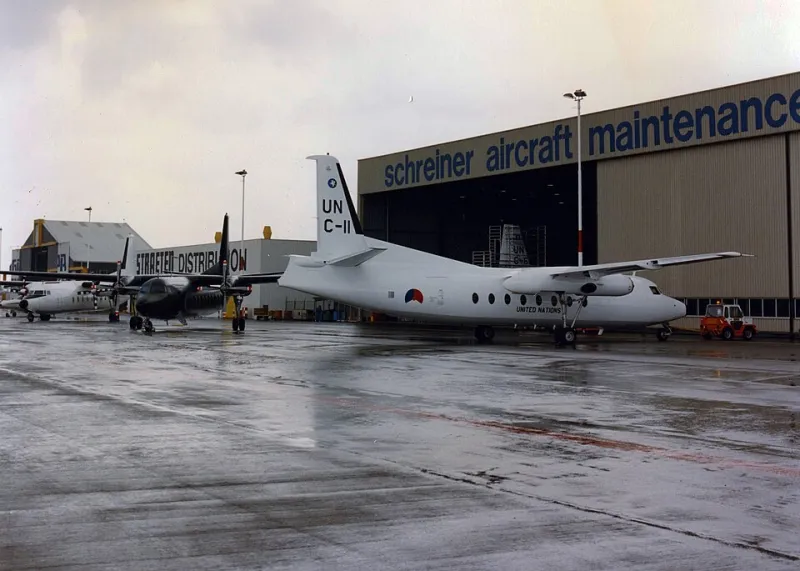
Photo: unknown photographer (Koninklijke Luchtmacht), CC0, via Wikimedia Commons
Stealth programs are usually discussed through their intended signatures: radar cross section, infrared emissions, acoustic output, and the discipline required to keep all three within tolerance. Less attention is paid to the paperwork that accumulates when something goes wrong. Accident investigation boards, safety center reports, maintenance data, and Freedom of Information Act releases are not intelligence products. They are administrative and legal artifacts, written to establish cause, assign responsibility, and recommend fixes. But read in aggregate, they can function as a sensor of their own.
The Report Is Not the Secret; the Pattern Is
A single mishap report is a narrow document. It describes a specific aircraft, a specific event, and a specific chain of decisions. The value for signature analysis emerges when those documents are stacked together. A repeated maintenance procedure, a recurring discrepancy in a low-observable panel, a persistent delay in returning an aircraft to mission-capable status, or an unusual operational tempo can be visible across reports even when no individual document discusses stealth performance directly.
The disclosure is rarely dramatic. It is the quiet accumulation of detail: which components fail, which inspections take longest, which repairs require specialized facilities, and which environmental conditions correlate with damage. For a low-observable fleet, those details matter because signature management is not only a design problem. It is an industrial and procedural problem. A mishap file that names a failed access panel or a degraded coating process is also describing where signature control is most fragile in practice.
Safety Culture as a Disclosure Surface
The U.S. military’s safety-investigation system is deliberately separate from its operational intelligence apparatus. Investigators are charged with preventing recurrence, not with protecting program equities. That separation is a strength. It produces candid findings that can improve safety and accountability. It also means that the documents generated by that system are shaped for a different audience than the one that consumes stealth program data.
This is not a failure of classification. Much of the sensitive material is redacted, and many reports are released only in heavily edited form. But redaction is a blunt instrument. It can remove names, technical specifications, and unit identifiers while leaving intact the broader narrative of how an aircraft failed, how long it took to repair, and what infrastructure was required to restore it. Those narratives are useful to anyone trying to understand the sustainment burden of low observables.
In that sense, the safety ecosystem is an unintended archive. It records the friction that stealth programs experience outside the clean geometry of design reviews and flight-test reports. That friction is often more revealing than a brochure.
FOIA and the Long Tail of Maintenance Data
FOIA releases add another layer. Maintenance databases, depot-level reports, and safety summaries are not typically written for public consumption, but they can be requested and, over time, partially released. The result is a long tail of small disclosures that are individually unremarkable and collectively informative. A document may reveal that a particular coating repair took longer than expected, that a specific diagnostic procedure required a specialized facility, or that a component had a higher-than-expected removal rate.
For the analyst, the challenge is not finding one blockbuster document. It is building a mosaic from fragments. The same is true for adversaries. The difference is that the United States has an open safety culture and a legal framework that makes this mosaic possible. That openness is a deliberate choice, and it carries tradeoffs.
Why This Matters for Program Risk
Stealth programs are often assessed through cost per flight hour, mission-capable rates, and modernization timelines. Mishap and maintenance data add a qualitative dimension. They show where the program is brittle. A fleet that struggles to restore signature integrity after minor damage is a fleet with a sustainment problem. A fleet that depends on a small number of specialized repair facilities is a fleet with a resilience problem. A fleet whose safety reports repeatedly describe the same procedural workaround is a fleet with a discipline problem.
Those are not merely safety issues. They are operational vulnerabilities. An adversary does not need to know the exact radar cross section of an aircraft to benefit from knowing that its low-observable skin is difficult to maintain in austere conditions. The mishap record can supply that insight without ever disclosing a classified number.
The Transparency Dilemma
The obvious response is to restrict access. But safety investigations depend on candor, and candor depends on a culture in which findings are shared widely enough to prevent recurrence. Over-classifying maintenance and mishap data can degrade the safety system that produces the data in the first place. The more defensible approach is to recognize that the disclosure channel exists and to manage it deliberately: redact with an eye toward patterns, not just individual facts, and treat the aggregation of unclassified details as a risk in its own right.
For Low Observable readers, the lesson is that signature management does not end at the ramp. It extends into the paperwork that follows an aircraft through its worst days. The mishap report is not a sensor in the traditional sense. But it observes something real, and it leaves a record.