The Signature Isn't a Number: Bay Doors and the Transient Physics of Stealth
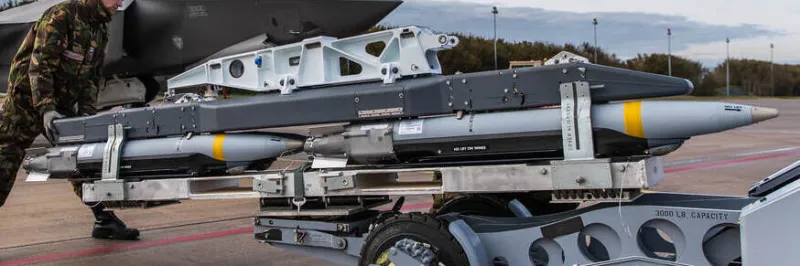
Photo: Defensie Nederland, CC BY-SA 4.0, via Wikimedia Commons
In program briefings and public descriptions, a stealth aircraft is frequently reduced to a number: a radar cross section expressed in square meters, a figure of merit tied to a particular frequency and aspect. That convention is useful for comparison, but it misstates the physics of an actual mission. A low-observable aircraft is not a sculpture with a permanent signature. It is a system that moves, radiates, opens, closes, and releases objects. No moment in that sequence is more revealing than the opening of a weapons bay.
The Difference Between a Shape and a State
Radar cross section is not an intrinsic property of an object in the way that mass is. It is a measurement of how a target scatters energy under specific conditions: frequency, polarization, aspect angle, and the geometry of everything nearby. A closed bay presents one scattering problem. An open bay presents another. When the doors swing outward, they create new edges, new cavities, and new angles between surfaces. The internal structure of the bay — its walls, ribs, actuators, and the stores themselves — becomes part of the antenna problem. The signature is no longer a single value but a function of time, door position, and store motion.
That distinction matters because air-defense systems do not observe a brochure figure. They observe returns. A transient spike that lasts a fraction of a second can be enough to support a track, particularly if the spike occurs at a predictable point in an engagement sequence. The open bay is therefore not merely a mechanical event. It is a brief change in the aircraft's electromagnetic identity.
What the Range Actually Records
Measuring those transients is a specialized discipline. Static RCS measurements on a pole or in a compact range can characterize a closed airframe with great precision, but they cannot fully capture the dynamics of a door cycle. Time-resolved measurements require instrumentation that can sample radar returns at rates fast enough to resolve the door motion and the subsequent store separation. High-range-resolution profiles and inverse synthetic aperture radar images help engineers see where the energy is coming from: a door edge, a cavity resonance, a hinge line, or the store itself.
Outdoor ranges add realism. Facilities such as the Air Force's test complexes in the Nevada and California deserts, and the Navy's instrumented ranges along the Atlantic coast, support dynamic signature work under conditions that approximate operational geometry. The goal is not simply to record a peak value but to build a library of signatures indexed by door angle, aircraft attitude, store type, and time since release. That library feeds models, mission planners, and survivability assessments. It also exposes inconvenient truths. A treatment that works well on a closed surface may perform poorly on a moving edge. A cavity that is benign at one frequency may resonate at another.
Doors as Radiators: The Infrared Ledger
The radar problem is only half of the transient signature. Infrared sensing adds a second ledger. A closed bay is a relatively controlled thermal surface. An open bay exposes internal structure that may be warmer than the surrounding skin, along with the thermal mass of the stores and the internal surfaces of the bay. The door motion changes the view factor between those surfaces and the sky, and it can briefly present a larger, warmer area to a sensor. Solar loading on the doors themselves adds another variable depending on geometry and time of day.
Infrared seekers and imaging sensors do not need a sustained signature to be useful. A short-lived thermal contrast can be sufficient for detection or tracking, especially against a cool background. The open bay thus creates a window in both the radio-frequency and infrared domains at the same time. Designers can shape and cool and coat, but they cannot fully eliminate the fact that opening a door changes what the aircraft looks like from the outside.
Store Separation and the Second Signature
When a store leaves the bay, the problem compounds. The aircraft and the store briefly form a coupled scattering system: the store is close enough to interact with the aircraft's surfaces and with the bay cavity, and its own signature may be significant. Separation trajectories are designed to move the store clear of the aircraft quickly, but the interval is not zero. During that interval, the bay doors remain open, the store is in motion, and the aircraft may be changing attitude. The result is a composite signature that is difficult to predict analytically and expensive to measure fully.
This is why store separation testing is not only a safety and carriage issue. It is a signature issue. The same cameras and radar systems that track separation dynamics can also record the electromagnetic behavior of the departing store and the open bay. Engineers use that data to refine door timing, release sequences, and aircraft maneuvers. The objective is to minimize the duration and intensity of the transient without compromising the safe separation of the store.
The Design Trade
The open-bay problem shapes design in ways that are not always visible from the outside. A larger bay can carry more or larger weapons, but it also creates a larger cavity and a larger door structure. Door edges can be treated with radar-absorbent materials and shaped to reduce diffraction, but those treatments add weight and maintenance burden. Faster door actuation reduces exposure time, but it imposes loads on hinges and actuators and may increase acoustic and thermal signatures. Internal carriage itself is a signature strategy, but it concentrates the signature problem at the moment of use.
There is no free solution. The tradeoffs are weighed against mission profiles, threat systems, and the expected frequency of bay openings. An aircraft that opens its bays rarely can afford a different balance than one that expects to release stores repeatedly in a contested environment. The next generation of stealth design is likely to treat the open-bay transient as a first-class requirement rather than an afterthought, with shaping, materials, and sequencing considered together from the start.
A Moment of Candor
The weapons bay is where the carefully managed signature of a stealth aircraft becomes visibly dynamic. It is a reminder that low observability is a schedule as much as a shape: a property that must be preserved across every phase of a mission, including the phases when the aircraft is doing exactly what it was built to do. The closed airframe may be the public face of stealth. The open bay is the honest one.