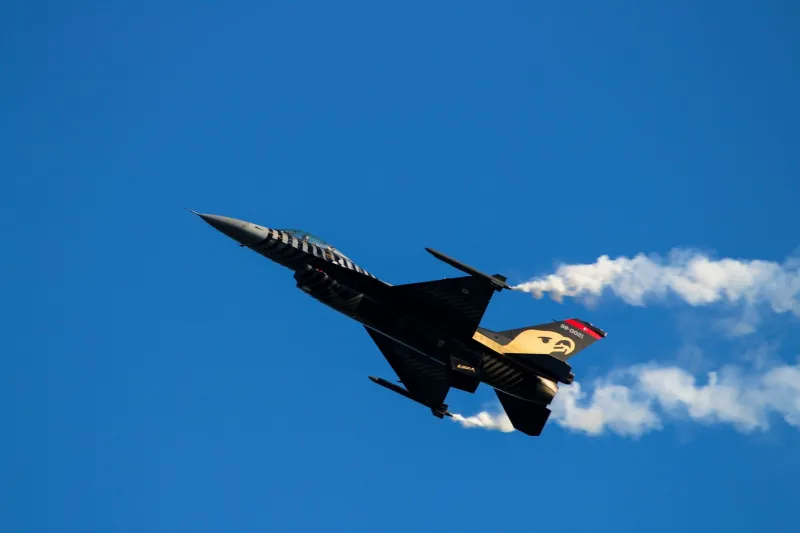
The Canopy Compromise: Where Transparency, Signature, and Sustainment Collide
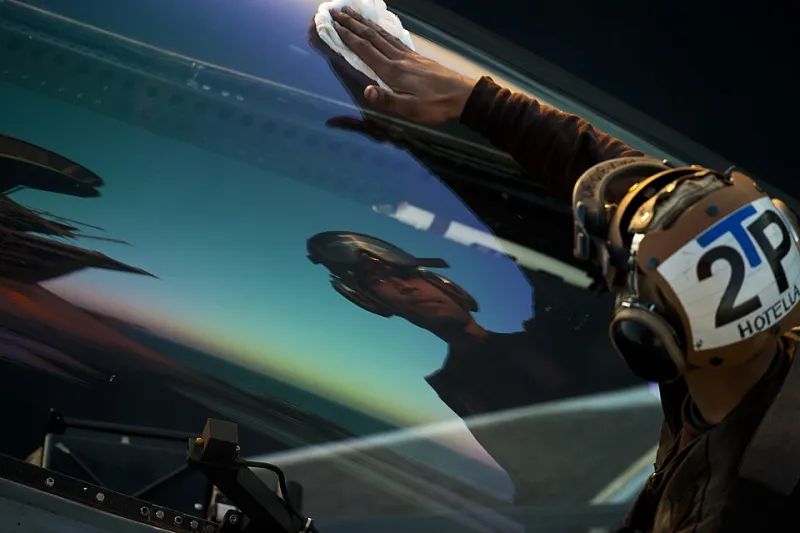
Photo: U.S. Navy photo by Mass Communication Specialist 3rd Class Benjamin Crossley, Public domain, via Wikimedia Commons
A Window With Contradictory Orders
Stealth aircraft are often described as if their signature were settled by geometry: faceted surfaces, aligned edges, buried engines, and serpentine ducts. The canopy interrupts that story. It is a large, curved, transparent aperture in an otherwise carefully shaped airframe, and it must satisfy a set of requirements that pull in opposite directions. It has to be transparent enough for the pilot to see through, robust enough to survive bird strikes and pressurization cycles, stable enough to preserve optical quality over years of service, and still managed for radar and infrared signature. No single material or coating solves all of those problems at once.
The result is a compromise that signature engineers do not eliminate so much as manage. The canopy is not merely a window. It is a signature boundary, a structural load path, an optical instrument, and a maintenance item — and each of those roles leaves a trace that an adversary’s sensors may exploit.
Radar Transparency Is Not Radar Invisibility
A canopy’s radar behavior begins with its dielectric properties. Conventional transparency is achieved with materials that are relatively low-loss at radar frequencies, but “low-loss” is not the same as “invisible.” The canopy still has thickness, curvature, and interfaces. At some frequencies and angles, those features can scatter energy or create localized resonances. The canopy frame, sill, hinges, and attachment points add conducting discontinuities that can behave as unintended radiators or reflectors if they are not carefully controlled.
This is why canopy design is inseparable from edge treatment and surface continuity. A canopy that is optically excellent can still present a signature problem at the seams. A frame that is structurally efficient can still create a corner reflector. The canopy is therefore a reminder that stealth is not a property of a shape alone; it is a property of every interface where materials, structures, and apertures meet.
The Infrared Problem Behind the Glass
The pilot’s environment is warm. The cockpit contains avionics, displays, life-support equipment, and a human being, all of which produce heat. Infrared sensors do not need to see through the canopy in the same way a radar does; they can detect the canopy’s own thermal emission and the contrast between the cockpit interior and the surrounding sky. Coatings can help manage infrared transmission, but they add another layer to the stack. That layer may be thin, but it is never signature-neutral. It can affect optical clarity, durability, rain erosion resistance, and radar performance.
This is the central tension of canopy signature management: the same surface that must pass visible light may need to block or shape infrared energy, and the same coating that improves one band can degrade another. The design team is not choosing between stealth and visibility. It is balancing several bands of the electromagnetic spectrum against structural and optical requirements that cannot be relaxed.
Seams, Fasteners, and the Maintenance Tell
A canopy spends much of its life being opened, closed, cleaned, inspected, and re-sealed. Each of those actions introduces variation. Sealant ages. Coatings erode. Fastener heads wear. Hinges develop play. A canopy that measured well in a controlled facility may present a different signature after a few hundred flight hours, especially if maintenance procedures do not reproduce the original surface conditions exactly.
This is where signature management becomes a fleet problem rather than a design problem. The canopy’s frame seams and attachment hardware are small features individually, but they sit on a large aperture and can create localized scattering. Replacement canopies must not only fit; they must match the signature assumptions used for the aircraft. That means tolerances, coating thickness, and seam treatment have to be controlled across the supply chain, not just in the original design.
Replacement Cycles and the Illusion of a Fixed Signature
Stealth aircraft are often discussed as if they have a single signature. In practice, signature is a distribution: it varies by aircraft, by configuration, by maintenance state, and by age. The canopy is one of the most visible examples of that variation. Canopies are replaced because of damage, delamination, optical degradation, or coating wear. Each replacement is an opportunity to restore signature performance — or to introduce a small inconsistency that persists for the rest of the aircraft’s service life.
The maintenance burden is compounded by the canopy’s role as a structural and pressure boundary. Inspections cannot be limited to optical clarity. They must also consider coating integrity, seal condition, frame fit, and the possibility of hidden moisture or contamination. A canopy that looks serviceable may still be a signature liability if its surface has changed in ways that are invisible to the eye but relevant to a radar or infrared sensor.
Why Shaping Cannot Finish the Job
Airframe shaping can direct radar energy away from threatened aspects, but it cannot make a cockpit disappear. The pilot must see out. The canopy must be there. The frame must carry loads. The coatings must do something. Shaping can reduce the canopy’s contribution at selected angles, but it cannot remove the aperture itself. That is why canopy signature management remains a persistent engineering and sustainment challenge even on aircraft designed from the outset for low observability.
The canopy is a useful corrective to the idea that stealth is a finished property. It is a negotiated condition, maintained through design discipline, manufacturing control, and repetitive inspection. The aircraft may be shaped to hide, but the canopy is where hiding becomes a daily practice.
The Quiet Real Estate
In signature terms, the canopy is some of the most expensive real estate on the aircraft. It is large, curved, exposed, and repeatedly disturbed by maintenance. It must satisfy contradicting demands in radar, infrared, optical, and structural domains. No amount of airframe shaping can fully resolve those contradictions, because the canopy is not an error in the stealth design. It is a necessary aperture in a system that must still be flown by a human being.
The lesson for signature management is that the vulnerable parts of a stealth aircraft are not always the loudest or the most obviously shaped. Sometimes they are the transparent ones — the surfaces that must remain clear, functional, and serviceable while still behaving as part of a low-observable system. The canopy is where that balance is most visible, and where it is most difficult to keep.