Custody Is the Commodity: Orbital Radar and the Stealth Sanctuary
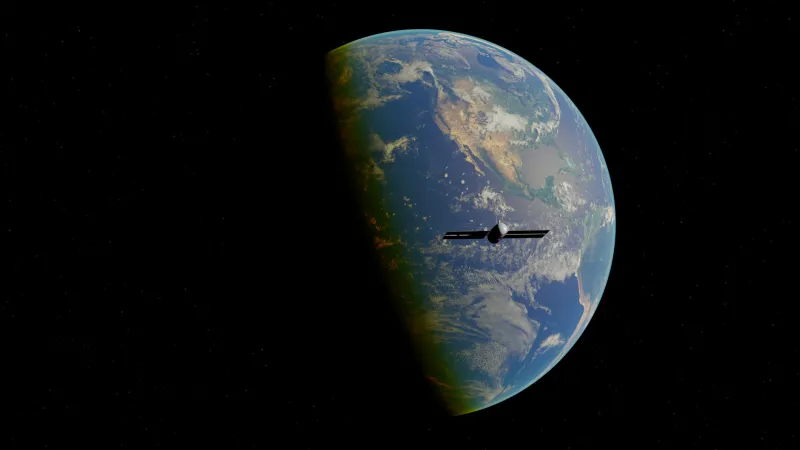
For decades, the stealth sanctuary has been partly a geographic idea. A low-observable aircraft could trade exposure for routes, timing, and terrain, leaning on the assumption that the most dangerous sensors were tied to the ground, to ships, or to aircraft with finite endurance. Space-based radar unsettles that assumption. It does not make geography irrelevant, but it changes what geography is worth.
The popular version of this story is simple: orbital radar sees everything, so stealth is finished. The operational version is harder. A radar in low Earth orbit is not a hovering eye. It moves quickly, its geometry changes constantly, and its power and aperture are constrained by launch mass, thermal management, and the economics of constellations. The important question is not whether space-based radar can detect a low-observable aircraft. The important question is whether it can hold custody of one long enough to matter.
Detection Is an Event; Custody Is a Process
A detection is a threshold event. A radar return crosses a signal-to-noise ratio sufficient for an algorithm or an operator to declare a track. Custody is different. It is the repeated, timely, and accurate updating of that track across maneuvering, emissions changes, and environmental clutter. Custody is what lets a commander assign a weapon, cue another sensor, or decide that a corridor is no longer safe.
Space-based radar can contribute to both, but not equally. A single orbital pass may offer a detection opportunity. A constellation may offer revisit. Sustained custody requires enough satellites, enough dwell, and enough cross-cueing to close the gaps between passes. Those gaps are not a minor technical detail. They are the difference between a sensor that complicates routing and a sensor that compresses the battlespace.
This distinction matters because stealth has never meant invisibility. It means reducing the range at which a given radar can detect, track, and classify a target. If an orbital radar detects an aircraft at a shorter range than a ground radar would, the aircraft still gains something. If a constellation can hand that track to a second sensor before the first loses it, the gain shrinks. The contest is therefore about continuity, not a single moment of exposure.
The Geometry Above the Weather
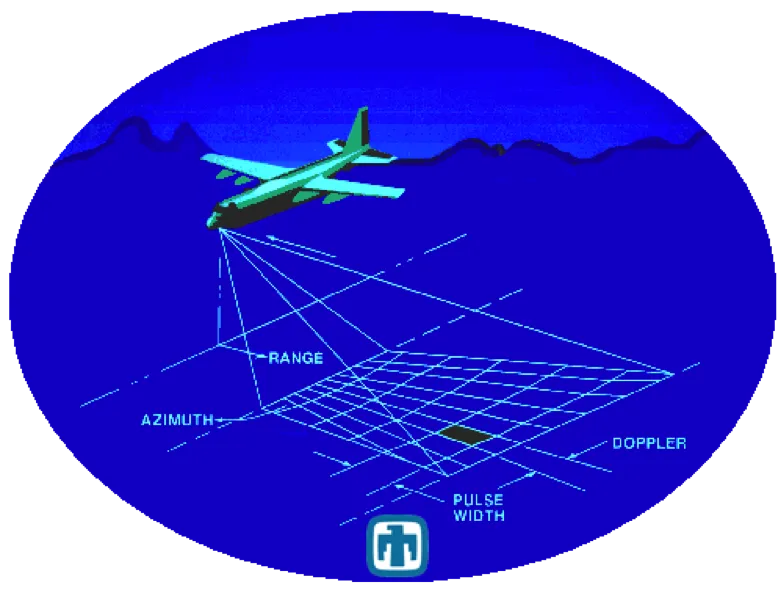
Orbital radar has one obvious advantage: it can look down through weather and darkness, and it can do so without a host nation's permission. It also has less obvious disadvantages. Low Earth orbit imposes high relative velocity, which complicates moving-target indication and clutter rejection. The radar must separate a small moving target from a much larger background of terrain, sea, and weather returns. Doppler processing helps, but it is not a magic filter.
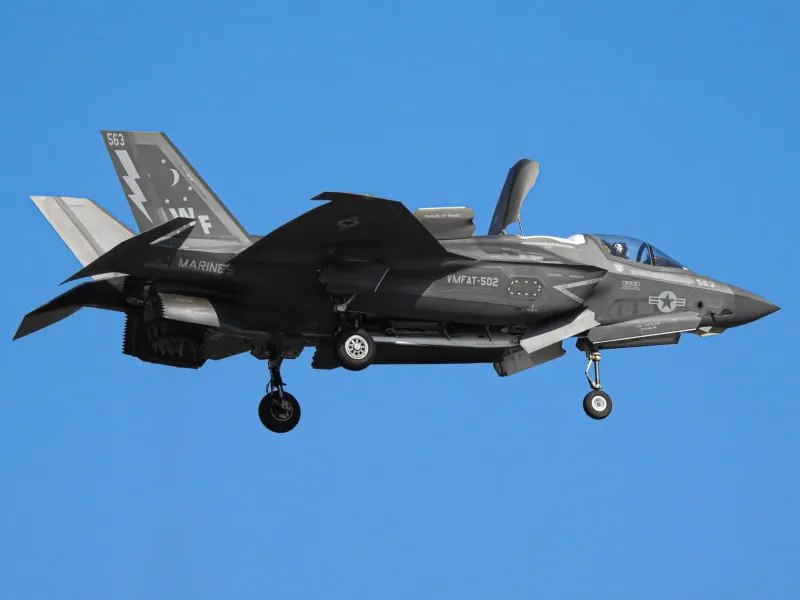
Geometry also cuts both ways. A low-observable aircraft is typically shaped and treated to manage returns across a range of threat aspects, but not every aspect is equal. A radar looking from above and ahead may see different scattering features than a radar looking from the side at low altitude. That does not mean orbital radar automatically sees stealth aircraft more clearly. It means the signature problem is not solved by a single RCS number. Broadband shaping, edge treatment, and control of surface discontinuities matter because the observing geometry is less predictable than a fixed ground site.
The orbital platform itself is constrained. Power, antenna size, cooling, and downlink bandwidth all limit what a satellite can do. A radar that stares at one patch of ground for too long cannot simultaneously cover a wide area. A constellation can distribute that burden, but it also multiplies cost and complexity. In 2026, the space-based radar conversation is less about a single miraculous satellite than about constellation design, tasking, and data fusion.
Why Stealth Does Not Become Obsolete
If orbital radar becomes more capable, the first effect is not the disappearance of stealth. It is the raising of the cost of predictable routing. An aircraft that can be detected only intermittently may still penetrate if its route exploits coverage gaps, if its emissions are controlled, and if its signature is managed across the aspects that matter. The sanctuary becomes a schedule rather than a place.
That shift favors several familiar disciplines. Mission planning must account for orbital ephemerides in the same way it accounts for surface-to-air missile rings. Emission control becomes more valuable because a radar track is easier to maintain when the target is also transmitting. Electronic attack becomes more focused on track-breaking rather than blanket noise, because the goal is to interrupt custody long enough for a route change or a weapon release. Decoys and force packaging can impose ambiguity on a constellation that must decide which track is real.
None of this restores the old sanctuary. A low-observable aircraft designed for a world of ground-based threats may need to revisit how its signature behaves from above, how its routing software treats orbital revisit, and how its electronic attack systems prioritize track continuity. The adaptation is incremental, but it is real. Stealth remains useful precisely because it raises the cost of custody, not because it guarantees invisibility.
The 2026 Adaptation Agenda
For the U.S. military, the practical agenda is integration. Space-based radar data must feed the same command-and-control systems that track air and missile threats, and it must do so with latency low enough to support decisions. Commercial synthetic aperture radar and moving-target indication services add capacity, but they also add questions about data rights, classification, and confidence. A track that is good enough for warning may not be good enough for engagement.
The harder agenda is doctrine. If orbital radar makes some corridors more observable at certain times, then stealth operations must become more temporal. That means treating satellite overflight not as a background condition but as a variable in the mission plan. It also means training crews to recognize when custody is degrading and when a track is being handed off. The stealth pilot's problem is no longer only whether a radar can see the aircraft. It is whether a network can keep seeing it.
The Risk of Overconfidence
There is a temptation in both directions. One camp treats space-based radar as an omniscient eye that ends stealth. The other treats orbital physics as a permanent shield. Neither is serious. The more useful position is that orbital radar changes the economics of custody. It makes some routes less safe, some timings more valuable, and some electronic attack missions more important. It does not eliminate the need for low observables, and it does not guarantee a persistent track.
The stealth sanctuary is not ending in a single moment. It is being redefined by a sensor layer that is becoming more persistent, more networked, and more commercial. The aircraft that survive that change will be the ones designed and operated for a world where coverage is not a place on a map but a condition that must be scheduled around.